My Role
Designed personalization strategies across customer touch points for multiple retail brands
Created contextual messaging campaigns aligned with specific user journey stages
Developed campaign mirroring techniques connecting email, display, and on-site experiences
Analyzed user behavior data through the Qubit platform to identify optimization opportunities
Collaborated with brand e-commerce teams, marketing, and Qubit’s technical team on implementation
The Shared Problem
Disconnected Journeys: Customers arrived via email campaigns, paid ads, or organic search—but the on-site experience was identical regardless of how they got there. Promotional messaging from emails wasn’t reinforced on-site, discount codes were forgotten by the time customers reached checkout, and the sense of continuity between touchpoints was absent.
Wasted Touchpoints: Empty shopping bags, zero-results pages, and checkout drop-off points were treated as dead ends rather than opportunities to re-engage. Every brand had high-traffic moments where customers were slipping away without intervention.
Generic for Everyone: Whether a visitor was a first-time browser, a returning student, or a high-value repeat customer, they all saw the same experience—the same homepage, the same product listings, the same checkout flow.
Personalization Framework
Rather than treating personalization as isolated A/B tests, I developed a structured framework that could be adapted across brands. This framework organized personalization interventions into four strategic layers, each targeting a different stage of the customer journey and a different type of friction.
Layer 1: Campaign Mirroring
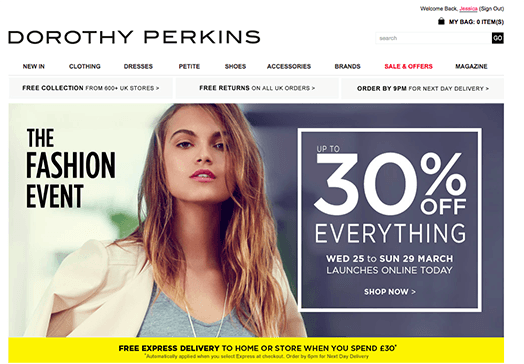
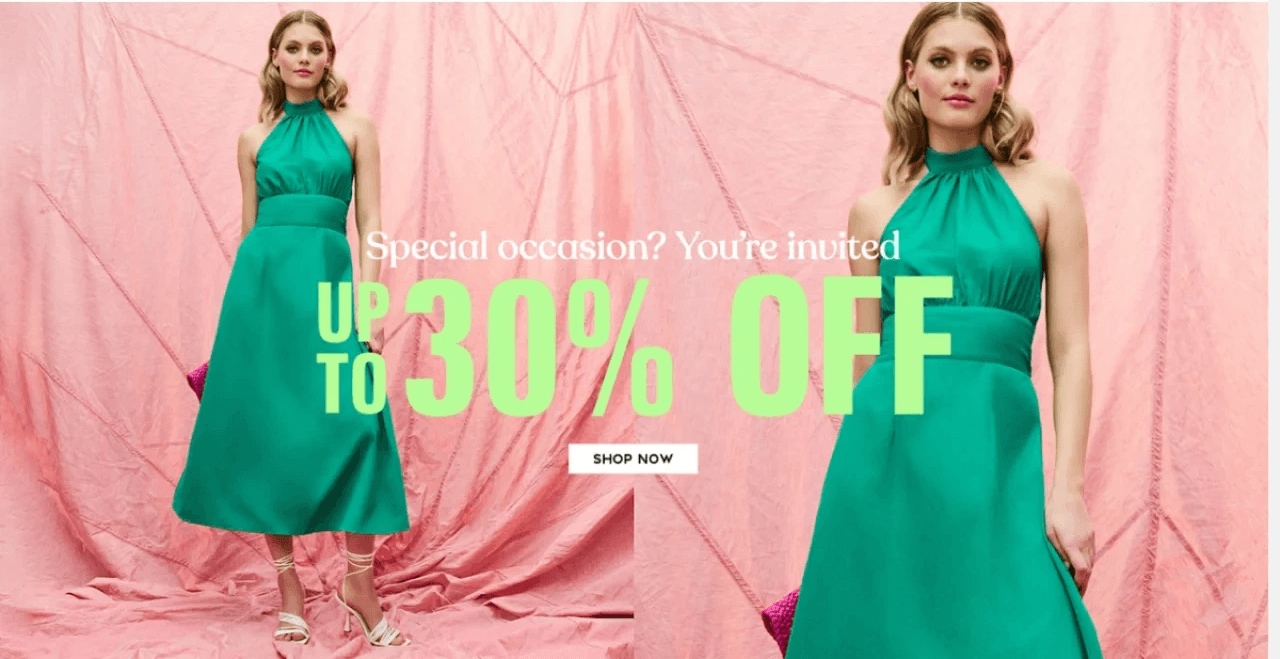
The principle behind campaign mirroring is simple: when a customer arrives on-site from a specific marketing touchpoint, the website should acknowledge and reinforce that context. If a customer clicked through from a “25% off + free delivery” email, the on-site experience should remind them of that offer at every relevant moment—on product pages, in the shopping bag, and at checkout.
I designed contextual overlays and inline messaging components that dynamically reflected the acquisition channel. This included automated discount code reminders surfaced at the point of purchase, promotional banners aligned to the specific campaign the customer arrived from, and channel-specific welcome messaging that created continuity between email and web.
Layer 2: Behavioral Triggers
Using Qubit’s real-time data capabilities, I implemented interventions triggered by specific user behaviors and contextual signals. These were designed to apply proven conversion psychology—urgency, social proof, and loss aversion—in ways that felt helpful rather than manipulative.
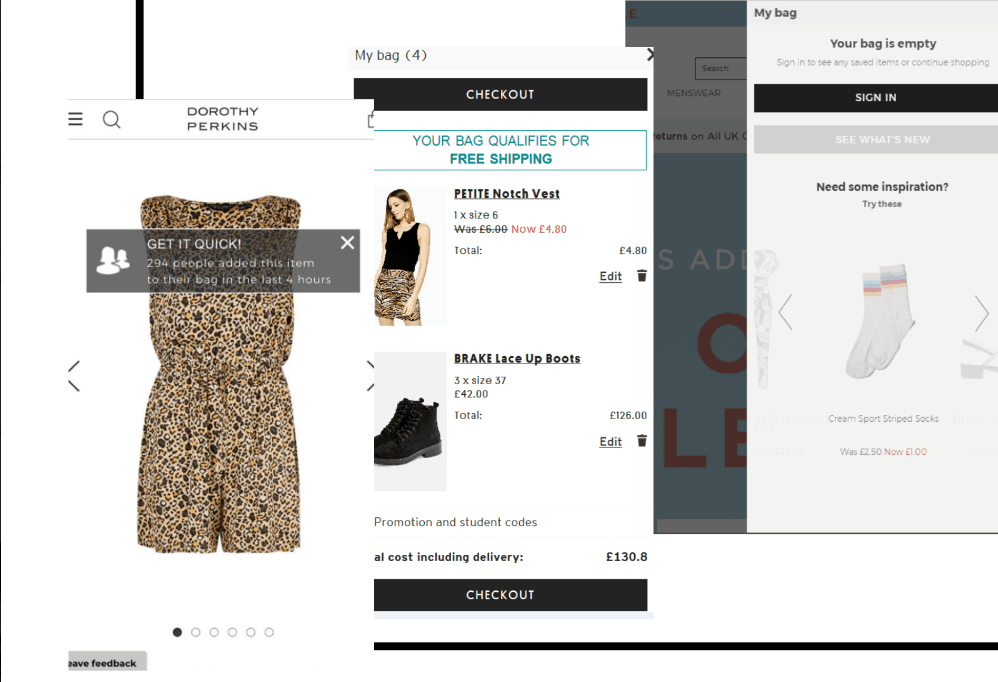
Urgency Messaging: “Selling fast” badges and “Get it quick” prompts on products with high recent demand, giving customers genuine information about inventory velocity.
Social Proof: Dynamic indicators showing product popularity—items trending in a customer’s region, or products frequently added to bag in the last 24 hours.
Threshold Nudges: Intelligent messaging showing customers how close they were to qualifying for free shipping, turning a potential abandonment trigger into a reason to add one more item.
Layer 3: Recovery & Re-engagement
I focused particular attention on moments where customers typically disengage—turning dead ends into discovery opportunities.
Empty Bag Recovery: Instead of showing a blank state when a customer’s shopping bag was empty, I designed personalized product carousels based on their browsing history and popular items.
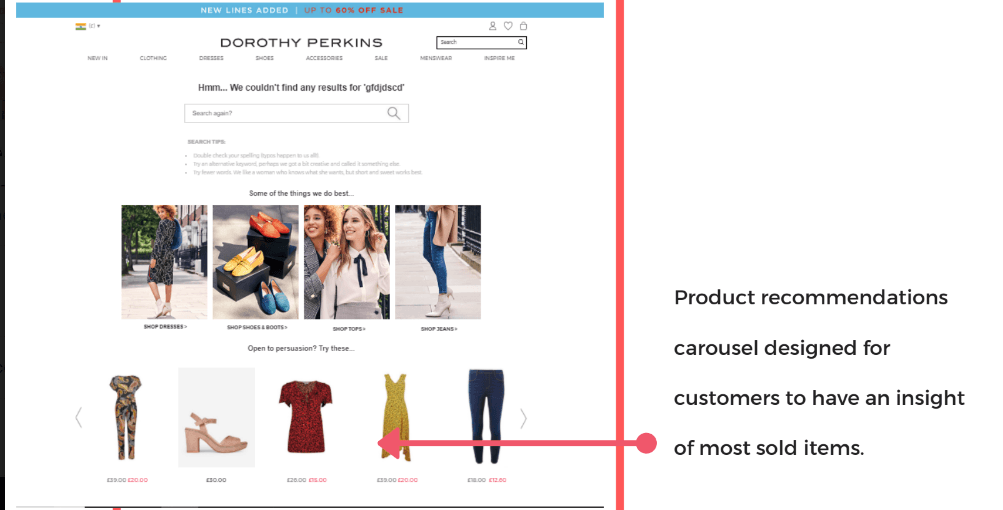
Zero-Results Pages: Transformed no-results search pages from frustrating dead ends into recommendation engines, surfacing relevant product carousels that kept customers engaged.
Checkout Simplification: Streamlined the purchase path with clear progress indicators and reduced friction at the point of conversion.
Layer 4: Segmented Experiences
Different customer segments warranted fundamentally different on-site experiences. I worked with each brand’s e-commerce team to identify their highest-value segments and design tailored journeys for each.
This ranged from new visitor welcome flows that oriented first-time shoppers, to student-specific pricing experiences, to geo-targeted product prioritization based on regional purchasing patterns.
Brand Implementations
The framework was adapted to each brand’s specific customer base, trade calendar, and business priorities. Below are the key implementations across the Arcadia portfolio.
Dorothy Perkins
Campaign mirroring and conversion funnel optimization
CHALLENGE: Customers arriving from email campaigns encountered a generic on-site experience with no acknowledgement of the promotions that brought them in. Discount codes were forgotten by checkout, and the path to purchase was fragmented.
WHAT I DID: Designed a campaign mirroring system that created dynamic on-site messaging reflecting each customer’s acquisition channel. Built contextual layers for product pages, the shopping bag, and checkout that reminded users of active email promotions and automated discount code application.
Implemented “selling fast” product badges, shipping threshold alerts, and empty bag recovery carousels. Transformed zero-results pages into personalized recommendation engines.
IMPACT: Contextual discount reminders significantly improved code redemption rates. The no-results recovery experience converted previously lost sessions into product discovery moments.
Topshop / Topman
Student personalization and geo-based social proof
CHALLENGE: Students represented a critical demographic (peaking at 50% of UK sales), but the 10% student discount was buried and not prominently surfaced during the shopping experience. Additionally, the team identified that product popularity varied significantly by geography, but this insight wasn’t reflected in the browsing experience.
WHAT I DID: Designed a “Student Prices” toggle in the website header that, when activated, dynamically displayed student pricing beneath every product—without page reloads—across both product listing and product detail pages.
Built a geo-based social proof system using IP address data to identify visitor locations and prioritize products popular in their region. For the US market, targeted the top 5 cities (New York, LA, Atlanta, Houston, Chicago) with carousels showing the most added-to-bag products in the last 24 hours.
Implemented “Don’t miss out” urgency banners on product pages and personalized welcome pop-ups for new visitors.
IMPACT: The student pricing experience contributed to driving student sales to peak at 50% of UK revenue. Personalization helped drive Topshop’s overall conversion rate up by 11%.
Miss Selfridge
Trade-aligned display personalization and lifecycle marketing
CHALLENGE: With a highly active trade calendar featuring rapid-fire promotional events (Black Friday, Cyber Monday, Christmas), display advertising and on-site messaging needed to be precisely synchronized with offline and online activity—but the creative and messaging were often misaligned.
WHAT I DID: Aligned creative planning directly to Miss Selfridge’s trade plan, ensuring messaging and assets were updated daily to reflect current events. Designed a lifecycle marketing display strategy structured around three objectives: finding new customers (50% of budget), prospecting to conversion (25%), and growing customer lifetime value (25%).
To measure true impact, implemented a 10% control group served blank ads—validated as statistically significant via a two-tailed test—enabling accurate calculation of incrementality alongside the New Customer Rate (NCR).
IMPACT: The approach delivered measurable incremental ROI while maintaining focus on new customer acquisition—avoiding the common trap of inflating results by over-indexing on retargeting.
Evans
Accessibility-conscious personalization for a non-digital-native audience
CHALLENGE: Evans’ predominant customer base were not digital natives, making usability and simplicity paramount. The checkout process created unnecessary friction, and the team needed personalization strategies that enhanced rather than complicated the experience.
WHAT I DID: Prioritized best-selling products on mobile with urgency messaging applied to the top 200 added-to-bag items, keeping the interface clean while still leveraging social proof. Designed segmented welcome messages for new visitors that provided gentle orientation—explaining how the site works, highlighting available offers, and surfacing useful information without overwhelming.
Simplified the checkout flow by streamlining the cart page and reducing steps in the path to purchase, making the journey more straightforward for customers less comfortable with online shopping.
IMPACT: As the Group Digital Director noted: “Personalization is helping us build relationships with our customers that translate into increased engagement, loyalty and revenue.” Evans saw measurable returns from investing in personalization at scale.
Burton
Content-driven personalization and omni channel engagement
CHALLENGE: Burton’s strategy centred on inspiring customers through their purchasing journey, but the on-site experience lacked the contextual relevance and real-time responsiveness needed to make content feel personal.
WHAT I DID: Implemented a personalization approach built around informing customers throughout their journey—surfacing relevant content, contextual product recommendations, and real-time messaging that adapted to browsing behaviour. Focused on omnichannel alignment, ensuring that in-store and online messaging told a consistent brand story.
IMPACT: The approach improved sales through better-informed purchase decisions, strengthened loyalty through consistent experience quality, and increased recommendation through customer satisfaction with the shopping journey.
Cross-Brand Patterns & Insights
Working across multiple brands within the same retail group provided a unique vantage point. Several patterns emerged that transcended individual brand implementations.
What Worked Consistently
Campaign Mirroring Created Seamless Journeys: Across every brand where we implemented it, connecting acquisition channel context with on-site messaging produced measurable improvements in discount code usage and conversion. The principle is straightforward—acknowledge why the customer is here—but execution requires careful coordination between marketing, e-commerce, and the personalization platform.
Urgency and Social Proof Needed Authenticity: Dynamic messaging like “selling fast” and geo-based popularity indicators worked because they were grounded in real data. Customers responded to genuine signals about inventory velocity and regional trends. The key learning was that these interventions must reflect actual behavior, not manufactured scarcity.
Dead Ends Are Opportunities: Zero-results pages and empty shopping bags were among the highest-impact personalization surfaces across the portfolio. By transforming these moments from frustration into discovery, we recovered sessions that would otherwise have been lost entirely.
Simplicity Scales: The most effective personalization experiences were often the simplest—a well-timed discount reminder, a student price toggle that works without reloading, a welcome message that actually orients. Complexity didn’t correlate with impact; clarity did.
Technical Insights
Real-time personalization requires careful balancing between relevance and site performance; every intervention adds latency, so prioritization matters
Incremental ROI measurement needs proper control groups—a 10% blank-ad holdout validated by statistical testing became our standard practice
Personalization at scale requires a platform-level approach (Qubit) rather than bespoke development per brand; reusable components across brands dramatically reduced implementation time
Reflections
What This Work Taught Me
Cross-Channel Thinking: Personalization isn’t a feature on a single page—it’s a strategy that spans the entire customer journey from email to ad to landing page to checkout. The most impactful work happened at the seams between channels, not within any single touchpoint.
Data as a Design Material: Working with Qubit’s platform taught me to treat behavioural data as a core input to design decisions. Browsing patterns, purchase velocity, geographic trends, and segmentation data all became materials that shaped the user experience as directly as typography or layout.
Conversion Psychology in Practice: Implementing urgency, social proof, and contextual relevance at scale—across brands with different audiences—gave me a practical understanding of when these techniques genuinely help customers make decisions and when they risk feeling manipulative.
The line is authenticity: real data, real inventory, real relevance.
Personalization as UX: This work reinforced that personalization belongs firmly within the UX discipline. Every intervention I designed was fundamentally a user experience decision: what does this person need at this moment, and how do we deliver it without adding friction? The platform may be a data engine, but the outcomes are designed experiences.
Looking Forward
Deeper segmentation using machine learning to move beyond rule-based personalization toward predictive experiences
Personalization accessibility standards—ensuring dynamic content meets WCAG guidelines and doesn’t create confusion for assistive technologies
Privacy-first personalization approaches as third-party data diminishes, focusing on first-party behavioral signals
Cross-device journey continuity—extending personalization context from mobile to desktop to in-store